
Does Having a Medical Marijuana Card Affect Working in Healthcare?
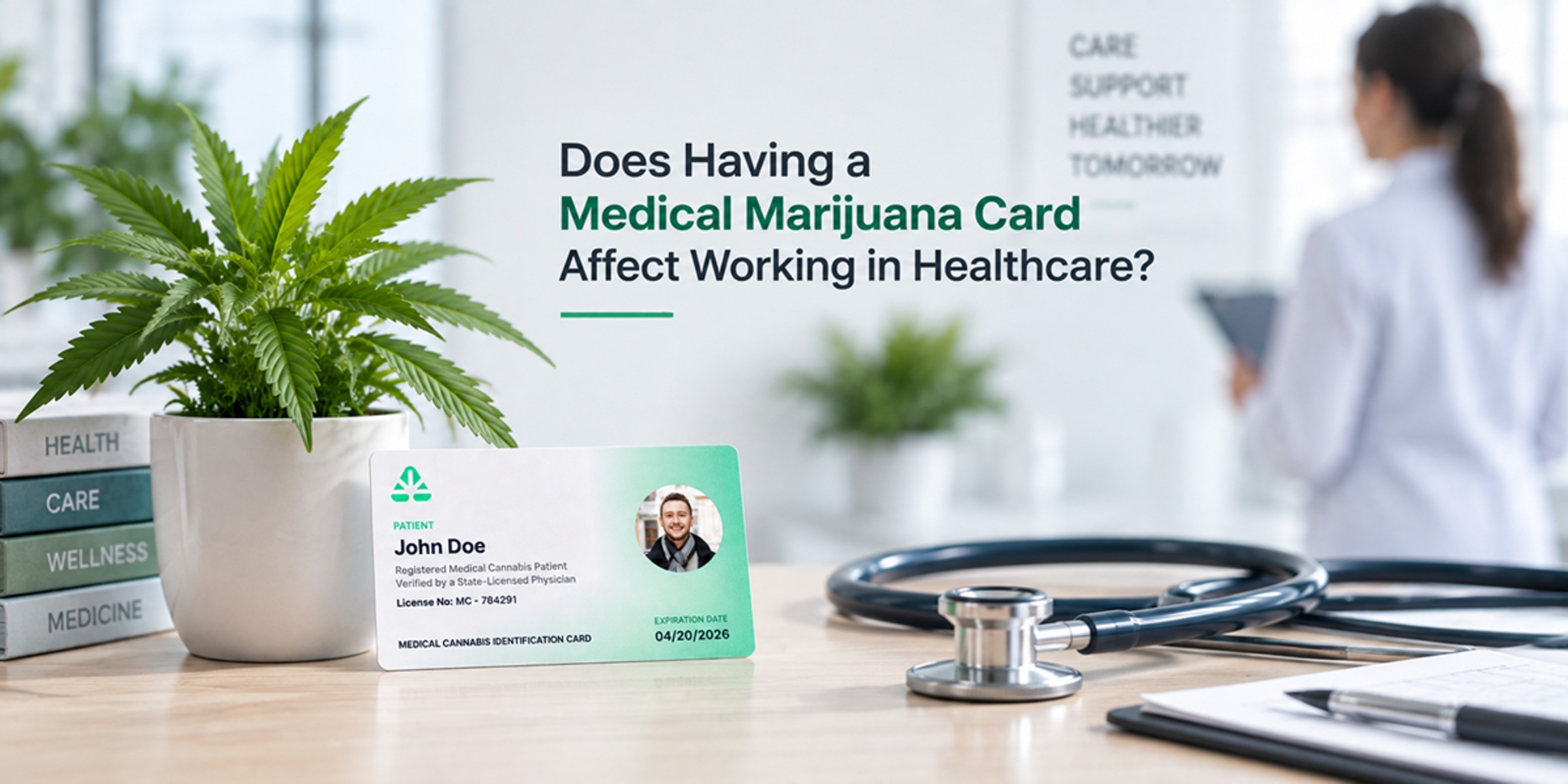
Yes, a medical marijuana card could impact your job as a healthcare provider. While it may be medically permissible in your state, numerous employers and healthcare professionals do not support its use in the workplace, and a drug screen could put you in great jeopardy.
This can include the possibility of termination or loss of your professional license.
You will need to know the laws for your state, as well as the policies of your employer, before considering using it.
Here are the key points healthcare workers need to know before obtaining a medical marijuana card.
1. Federal Law Still Classifies Marijuana as Illegal
Federal law is one of the main issues.
While your state might allow medical marijuana, marijuana is still illegal under federal law.
Many hospitals and healthcare facilities receive federal funding and may have to follow certain federal rules. Many also have strict drug-free workplace policies.
Because of this, a medical marijuana card may not protect you at work. Federal rules can also limit some workplace protections.
2. Employer Drug Policies Still Matter
Your employer's drug policy is very important.
Having a medical marijuana card does not always mean your employer must allow marijuana use. Many healthcare facilities have strict drug policies, which may include:
- Zero-tolerance rules for drug use
- Pre-employment drug testing
- Random drug tests
- Drug tests after workplace accidents
- Disciplinary action after a positive test
There is another important point to remember: drug tests can detect THC after the effects of marijuana have worn off.
THC can stay in the body for days or even weeks, and the time can vary from person to person.
This means you could test positive even if you are not under the influence at work.
The outcome depends on your employer's policy and the laws in your state.
3. Healthcare Jobs Are Safety-Sensitive
Healthcare workers have an important job. They care for patients and help protect their health and safety.
Some healthcare duties include:
- Caring for and monitoring patients
- Giving medications
- Making medical decisions
- Using medical equipment
- Responding to emergencies
These duties require focus and good judgment. For this reason, many healthcare employers have strict drug policies.
Even if you use medical marijuana outside of work, your employer may still be concerned about a positive drug test. This can be especially important for jobs that involve direct patient care.
4. State Laws Can Be Very Different
Medical marijuana laws are different in each state.
Some states give workers certain protections, while others give employers more freedom to enforce their drug policies.
For example, Oklahoma provides employment protections for registered medical marijuana patients in certain situations. Arizona and New Jersey also provide some protections for medical marijuana users.
However, these protections can have exceptions. They may not apply to every employer or every healthcare job.
That is why you should always check the laws in your state. Do not assume that having a medical marijuana card will automatically protect your job.
5. Your Professional License May Also Matter
Your job is not the only thing you should consider, your professional license may also be affected.
Healthcare professionals may be licensed by state boards, such as:
- State Board of Nursing
- Medical Board
- Pharmacy Board
- Other professional licensing boards
These boards help protect patients and make sure healthcare professionals can practice safely.
A drug-related workplace issue could sometimes lead to questions from a licensing board. The outcome depends on the situation, your profession, and your state's laws.
Possible consequences may include:
- Warnings or formal reprimands
- Fines
- Probation
- License suspension
- License revocation
Not every positive drug test will lead to these consequences. However, healthcare workers should understand that their professional license may also be at risk.
What Should Healthcare Workers Do?
If you are thinking about getting a medical marijuana card, do some research first. Do not assume that state legalization protects you at work.
Start by checking your employee handbook and workplace drug policy. Look for information about medical marijuana and drug testing, and also check what happens after a positive test.
You should also check your state's employment laws. These laws may explain what protections are available to medical marijuana patients.
If you are still unsure, talk to your HR department or a qualified employment attorney. If you are worried about your professional license, you can also speak with an attorney who understands healthcare licensing rules.
Final Thoughts
One concern with having a medical marijuana card is its effect on your career. The risk is different for each person and may depend on your job, work duties, and state laws. Your employer's drug testing policy also matters, a positive drug test could lead to suspension or even job loss in some cases.
It is important to note that an employer may prohibit medical marijuana use at work even if you have a valid medical card. After getting your card, research the drug laws in your state along with your employer's workplace drug policies. If you are unsure where you stand, consider consulting a legal professional.
Ready to Get Your MMJ Card?
Book your online evaluation today with a state-licensed physician. Fast, secure, and fully compliant with your state's medical marijuana program.
Related Articles
Common Mistakes to Avoid When Applying for a Medical Marijuana Card
Avoid common mistakes when applying for a medical marijuana card. Learn how to prevent documentation errors, application delays, and eligibility issues for a smoother process.
How to Apply for an Arizona Medical Marijuana Card Online in 2026
Learn how to apply for an Arizona medical marijuana card online in 2026, from getting physician certification to submitting your application through the state’s online system.